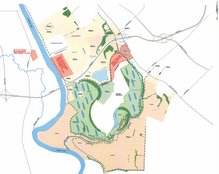
Lake Marion is an “impaired water” due to excess phosphorus and nitrogen. The inclusion of both nutrients as a source of lake pollution is significant because the Columbia Wetlands issue to date has been framed by comparing constructed wetlands to conventional treatment for the removal of phosphorus (only) from wastewater. This is not the whole picture. We provided a link in an earlier post showing that conventional removal of nitrogen and phosphorous is much more complicated and expensive than removing phosphorous alone.
Wetlands, on the other hand, treat both phosphorus and nitrogen more cost effectively than conventional treatment.
The EPA reports that over a twenty year period the cost (in present value terms) of constructed treatment wetlands is a mere 14% of the cost of conventional wastewater treatment. A WERF report also indicates conventional costs to remove nitrogen are 50% greater than the conventional costs to remove phosphorus.
It would be nice if the debate were only about phosphorous. But it’s not.
Wednesday, February 7, 2007


Tuesday, February 6, 2007
What Lives in Wetlands?
We are sometimes asked, “What lives in wetlands?” Usually this is followed by “Alligators?” The answer is yes; alligators are a small part of the diverse wildlife living in wetlands. To the extent that alligators live in Columbia, they will love the wetlands.
That doesn’t mean they are coming to your yard, though. Wild animals prefer not to share space with humans. It is when their habitat is reduced or conditions change that they find the need to explore new territory.
A special function of these wetlands is the habit they provide for wildlife. Constructed wetlands are undiminished and unaffected by drought for as long as they are needed to provide sewerage treatment. And as a primitive, moist refuge for wildlife, they will provide a home to lots of unique animals.
For instance, the Orlando wetlands are home to more than 200 species of animals.Birds especially love wetlands. Millions of blackbirds live in the Augusta wetlands and bird watchers are among the wetlands many tourists. The Orlando wetlands have over a dozen endangered species living in its wetlands park and, as I recall, they host the entire Florida population of several of these. As a result of the wildlife living in the wetlands, the Florida Audubon Society is a supporter and frequent visitor of the Orlando wetlands park.
That doesn’t mean they are coming to your yard, though. Wild animals prefer not to share space with humans. It is when their habitat is reduced or conditions change that they find the need to explore new territory.
A special function of these wetlands is the habit they provide for wildlife. Constructed wetlands are undiminished and unaffected by drought for as long as they are needed to provide sewerage treatment. And as a primitive, moist refuge for wildlife, they will provide a home to lots of unique animals.
For instance, the Orlando wetlands are home to more than 200 species of animals.Birds especially love wetlands. Millions of blackbirds live in the Augusta wetlands and bird watchers are among the wetlands many tourists. The Orlando wetlands have over a dozen endangered species living in its wetlands park and, as I recall, they host the entire Florida population of several of these. As a result of the wildlife living in the wetlands, the Florida Audubon Society is a supporter and frequent visitor of the Orlando wetlands park.
Wednesday, January 31, 2007
A Similar Experience
The Charleston, S.C. Post & Courier recently published an article entitled, “Lakes [Marion & Moultrie] can absorb development, experts say”. However, the article warned that “problems loom for maintaining water quality and fisheries” and referenced the experience of lakes Norman, Wylie and Mountain Island on the Catawba River in North and South Carolina. These lakes, and the experience of the wastewater treatment plants discharging into them, serve as an excellent case study for the Columbia Metro WWTP and Lake Marion.The Charlotte-Mecklenburg Utilities’ McAlpine Creek WWTP is located a mile north of the South Carolina border on the Catawba River. The McAlpine Creek WWTP is approximately the same size as Columbia Metro WWTP (it is permitted to treat 64 million gallons of wastewater per day). In 2002, when McAlpine Creek sought to renew its operating permits, SCDHEC challenged the permit because of phosphorus limits which already applied to South Carolina dischargers into the Catawba River. An agreement was reached which required McAlpine Creek to reduce its phosphorus levels by 70%. This required the plant to make $47 million in capital improvements and add $1 million in additional annual operating costs. More information on McAlpine Creek’s Phosphorus Reduction Project can be found in CMU’s year end report and on the Charlotte Chamber website.McAlpine Creek WWTP is an award winning plant. But when SCDHEC required stringent phosphorus limits, McAlpine Creek had no option but to implement the $47 million in capital improvements. SCDHEC has not yet implemented nutrient limits for Columbia Metro, but it is clear from Charlotte’s experience and that of Western Carolina Regional Sewer Authority and Lake Greenwood that regulations will be forthcoming, and they may come when unexpected. Complying with nutrient limits is obviously expensive and ultimately the money comes from the customers. In Columbia Metro’s case, there are already great pressures on rates plus 2/3rd’s of Columbia Metro’s water and sewer system is more than 50 years old. A comprehensive plan involving reliable, inexpensive technology would almost certainly seem to include a treatment wetlands component.
Benefits of Constructed Wetlands
- The effluent that is currently discharged into the Congaree River would instead be sent to the Columbia Wetlands for tertiary treatment to remove additional nutrients and toxins, resulting in cleaner wastewater and no additional odors.
- The Columbia Wetlands will allow the Metro plant to meet stricter effluent limits which will be applied to the plant (1) when it expands or (2) when DHEC completes a total maximum daily load (TMDL) study of the Congaree River or (3) when DHEC completes a wasteload allocation for the relevant watersheds.
- The capital and operating costs of constructed wetlands are a fraction of traditional wastewater treatment costs.
- Constructed wetland cells have an expected life cycle 20 - 30 years which may be extended with proper maintenance and operation, and can be continually renewed by “de-mucking” the wetlands, or removing the dead plant biomass and replanting the wetlands.
- Constructed wetlands are environmentally friendly and often serve as nature parks and research facilities:
- 40,000 visitors per year to the Augusta, GA wetlands
- 12,000 visitors per year to the Orlando, FL wetlands
- Constructed wetlands are a time proven solution:
- The following cities are developing constructed wetlands:
- West Palm Beach, FL (1600 acres)
- Chicago, IL
- Phoenix, AZ (1500 AC)
- New Orleans, LA
- Independence, MO
- Here is a list of 15 constructed wetlands in Florida, including the world’s largest CTW (16,500 acres) in the Florida Everglades.
Wednesday, January 24, 2007
Water Environment Research Foundation
We want to call attention today to a new link we have posted in the right hand margin of our blog. The Water Environment Research Foundation (WERF) is a non-profit that is dedicated to researching water quality issues. The link is to a 2005 report on what they call "Nutrient Farming". These are basically constructed treatment wetlands and the report compares costs of conventional treatment with wetland removal costs. Among other things they find "savings of 51-63%" if you don't trade credits and up to 76-78% if you do. They considered very large and very small facilities, used EPA criteria, and based their numbers on an Illinois location. We thought we had posted this earlier.
Dr. Tufford's Op-Ed Piece
Interesting opinion piece by Dr. Tufford yesterday. Dr. Tufford has studied phosphorous in rivers and has an interest in the Congaree. Because we are getting no posts here, we enclose a link to his piece so we can have something to discuss. He mentions the EPA and its opinions several times in his article. We have posted links on this site which discuss the issue of early measurement and the misconceptions of wetlands. We know we will be dealing with those issues and have addressed them with operators and designers. Are there other issues we don't know about? This is precisely the kind of feedback we want.
Opinions are changing as this technology advances and we want the freshest input. Back in 1999 the EPA said wetlands often are inappropriate for large urban areas "owing to their large land requirements," but that is clearly not relevant here, as it is not in Orlando and Augusta. In fact, for some reason, probably the many regulatory and cost changes in the intervening eight years, many urban areas such as Chicago, Seattle, Pittsburgh and others are looking at these same wetland systems for their wastewater.
We have placed relevant EPA links on this site from its inception. If you know of others, from the EPA or not, please send us the links. We have also posted links to many cites that have successfully used this process in varied geographic and climatic conditions. We are not finding links that say wetlands do not work. Dr. Tufford, if you know something we don't know, that is what this site is for. We think this idea works, but do not want to waste time if it doesn't.
Dr. Tufford also rightly mentions university research and review. We definitely want that, but without a project it was hard to know what to ask for. We agree that it is time to seek that affiliation. Dr. Tufford, are you volunteering?
Opinions are changing as this technology advances and we want the freshest input. Back in 1999 the EPA said wetlands often are inappropriate for large urban areas "owing to their large land requirements," but that is clearly not relevant here, as it is not in Orlando and Augusta. In fact, for some reason, probably the many regulatory and cost changes in the intervening eight years, many urban areas such as Chicago, Seattle, Pittsburgh and others are looking at these same wetland systems for their wastewater.
We have placed relevant EPA links on this site from its inception. If you know of others, from the EPA or not, please send us the links. We have also posted links to many cites that have successfully used this process in varied geographic and climatic conditions. We are not finding links that say wetlands do not work. Dr. Tufford, if you know something we don't know, that is what this site is for. We think this idea works, but do not want to waste time if it doesn't.
Dr. Tufford also rightly mentions university research and review. We definitely want that, but without a project it was hard to know what to ask for. We agree that it is time to seek that affiliation. Dr. Tufford, are you volunteering?
Monday, January 22, 2007
It's Great to be Green
The City of Columbia is going green (The State, January 20). Mayor Bob Coble will drive a City-owned hybrid car in order to “convey how serious [the City] is about protecting the environment.” The City has also joined the Cool Cities Campaign, a Sierra Club program which attempts to reduce global warming by turning Cities’ green commitments into action.
Our proposal is to be a part of that. First, please be clear, we want to do it in a way that saves money -- our goal is to prove that green and smart go together. If we really agree that there will soon be requirements to stop dumping fertilizer ingredients in the Congaree River, then we believe we are offering the least expensive way of doing that. We do not have to consider the general goodness of cleaning the water, the restored bird and animal habitats, the lowered urban temperature, the potential new parklands and walking trails, or the reduced greenhouse gases. If going green were the total goal, then these things alone might be enough to make the proposal worthwhile. After all, when you do those things you get a cleaner environment, more tourists and better recreation for your citizens, and those are legitimate government activities too. But all we are proposing here is a way to save the City and its taxpayers some "green" of their own, all the other "green" benefits just flow from that (no pun intended, I promise).
Our proposal is to be a part of that. First, please be clear, we want to do it in a way that saves money -- our goal is to prove that green and smart go together. If we really agree that there will soon be requirements to stop dumping fertilizer ingredients in the Congaree River, then we believe we are offering the least expensive way of doing that. We do not have to consider the general goodness of cleaning the water, the restored bird and animal habitats, the lowered urban temperature, the potential new parklands and walking trails, or the reduced greenhouse gases. If going green were the total goal, then these things alone might be enough to make the proposal worthwhile. After all, when you do those things you get a cleaner environment, more tourists and better recreation for your citizens, and those are legitimate government activities too. But all we are proposing here is a way to save the City and its taxpayers some "green" of their own, all the other "green" benefits just flow from that (no pun intended, I promise).
Subscribe to:
Posts (Atom)